



The German bank locker robbery has become one of the most shocking financial crimes in recent German history. The daring break-in, which targeted a branch of Sparkasse in the western state of North Rhine-Westphalia, left thousands of customers devastated after criminals looted more than 3,000 safety deposit boxes. Despite the scale of the crime and weeks of investigation, authorities have not yet made any arrests.
The incident has raised serious concerns about bank security systems and shaken public confidence in financial institutions across Germany.
How the Heist Happened
Accoridng to the BOL News sources, the authorities believe the German bank locker robbery occurred between Saturday, December 27, and Monday, December 29, during a quiet weekend just after Christmas. Investigators suspect the thieves carefully planned their operation and used professional tools to gain entry.
According to police findings, the criminals accessed the bank building through a high-rise structure in the nearby Beurer area. They allegedly tampered with a secured door connecting the car park to the bank. This door normally cannot be opened from the outside, but investigators believe the suspects ensured it was not fully closed, allowing them unhindered access to the building.
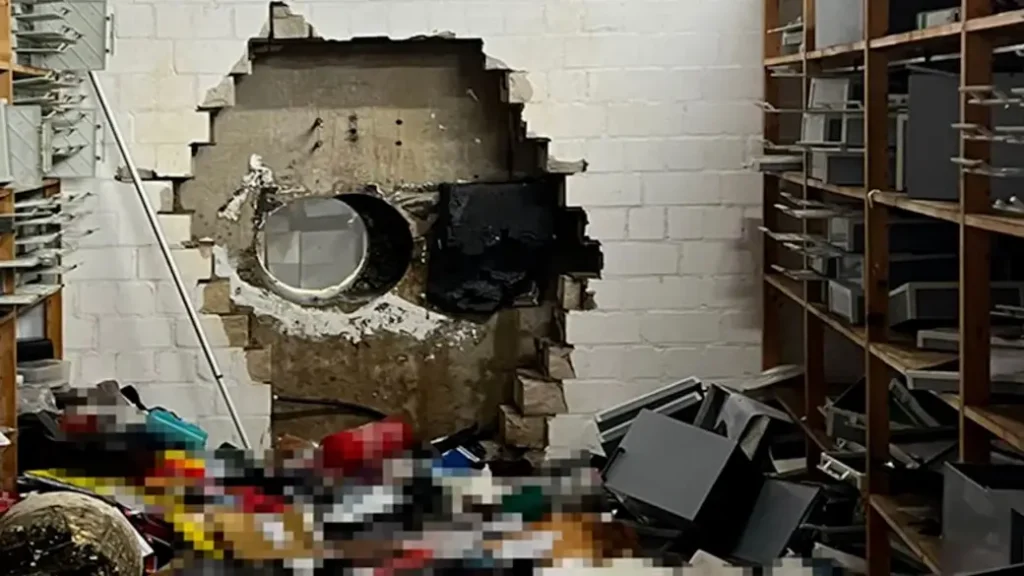
Once inside, the gang turned off several security systems and made their way to a basement room next to the vault. There, they installed a powerful drilling machine and created a 40-centimeter-wide hole through the wall leading directly to the locker storage area. This methodical approach demonstrates the high level of preparation involved in the German bank locker robbery.
Fire Alarm That Could Have Stopped the Crime
In a surprising twist, emergency services were alerted early in the morning on December 27 when a fire alarm inside the bank was triggered. The fire brigade and a private security company responded quickly, arriving at around 6:15 a.m. However, they found no visible signs of fire or smoke.
Officials later revealed that the alarm signal had originated from inside the vault area. However, firefighters were unable to access the space because the shutter door was closed. Since there were no obvious signs of danger, they concluded it was a false alarm, something that is reportedly not unusual.
Interior Minister Herbert Reul later explained that police did not have legal authority to search the premises at that time without a warrant, as the situation fell under the jurisdiction of the fire department. This missed opportunity has become one of the most controversial aspects of the German bank locker robbery.
3,250 Lockers Opened in Hours
Data retrieved from the bank’s computer systems shows that the first locker was opened at 10:45 a.m. on December 27, while the last was accessed at 2:44 a.m. It remains unclear whether the thieves managed to break into all 3,250 lockers within just a few hours or if the system data was manipulated.
The scale of the German bank locker robbery is staggering. After breaking through the wall, the criminals systematically opened nearly every safety deposit box, stealing cash, gold bars, jewelry, and other valuable possessions. German media estimates suggest that the total stolen amount could exceed 100 million euros.
Witnesses later reported seeing several individuals carrying large bags near the car park stairs on the night of December 28. Security camera footage released by police shows masked men and two vehicles, a black Audi RS6 and a white Mercedes, both fitted with fake license plates.
Discovery of the Devastating Scene
The crime was only fully discovered on December 29, after another fire alarm sounded at 3:58 a.m. When firefighters entered the building, they encountered chaos. According to officials, the vault area looked like a “garbage dump,” with more than half a million items scattered across the floor.
Investigators believe the thieves poured water and chemicals over many of the remaining belongings, causing further damage. Since then, authorities have been carefully sorting through the debris to determine which items belong to which customers.
The shocking images from inside the bank quickly spread across the country, making the German bank locker robbery a national headline.
Victims Left Devastated
The emotional toll of the German bank locker robbery has been severe. Around 200 angry customers gathered outside the bank once news of the break-in became public. Many demanded immediate access to check the condition of their valuables.
One victim, 63-year-old Joachim Alfred Wagner, said he lost not only millions of rupees worth of gold but also priceless family heirlooms passed down from his grandparents. He had rented a locker after experiencing multiple burglaries at his apartment, believing the bank would provide greater security. Upon hearing about the robbery, he admitted he “cried with rage.”
Another customer reportedly sold his apartment for €400,000 and stored the proceeds in a safety deposit box as retirement savings. For these victims, the German bank locker robbery was not just about money — it shattered their sense of safety.
Insurance and Legal Disputes
The bank has stated that safety deposit boxes are typically insured for up to €10,300 per box. However, for customers who stored assets worth far more than that amount, compensation may fall significantly short.
Several victims have already initiated legal action against the bank, claiming poor security and negligence. Lawyers representing customers argue that the criminals were able to operate for hours without interruption, raising serious questions about surveillance and internal monitoring systems.
The bank maintains that it was itself a victim of the crime and insists that the building was equipped with modern and recognized security technology. Still, the German bank locker robbery has sparked debates about whether additional safeguards are needed for high-value storage facilities.
Political and Public Reaction
Herbert Reul, Interior Minister of North Rhine-Westphalia, described the case as deeply troubling. He raised critical questions, including how no one heard the drilling sounds and whether there might have been insider involvement.
He also emphasized the psychological trauma caused by the German bank locker robbery. “For many people, this is not just about valuables,” he said. “It has damaged their sense of security.”
Police Chief Tim Frommeyer described the investigation as one of the largest and most complex cases in the history of the state. Law enforcement agencies are working intensively to track down the suspects and recover stolen property.
Ongoing Investigation
More than a month after the German bank locker robbery, no arrests have been made. Investigators continue to analyze surveillance footage, forensic evidence, and witness statements. Authorities have appealed to the public for information that may help identify the masked individuals seen in the car park.
The professionalism of the operation has led some experts to compare it to scenes from Hollywood heist films. The careful planning, precision drilling, and rapid escape suggest the involvement of experienced criminals.
Impact on Public Trust
Perhaps the most lasting impact of the German bank locker robbery is the erosion of public trust in financial institutions. Safety deposit boxes have long been considered one of the safest places to store valuables. This incident has forced many customers to reconsider that belief.
The case highlights the importance of reviewing security systems, emergency response protocols, and coordination between law enforcement and private institutions. For Germany, it stands as a wake-up call about vulnerabilities that criminals can exploit.
Record-Breaking Bank Locker Heist
The German bank locker robbery is not just a story of stolen money and jewels; it is a case that has shaken confidence in the very institutions designed to protect citizens’ wealth. With over 3,000 lockers emptied and losses potentially exceeding €100 million, it remains one of the largest bank heists in modern German history.
As investigations continue, victims await justice and clarity. Until arrests are made and stolen items are recovered, this dramatic robbery will remain a painful chapter in Germany’s financial history.