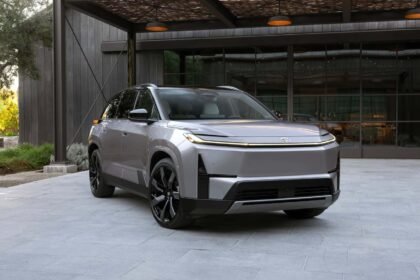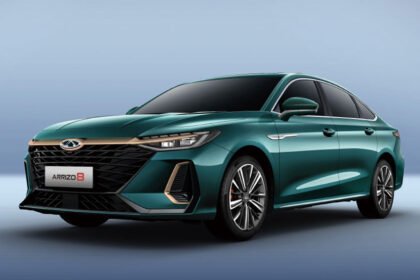

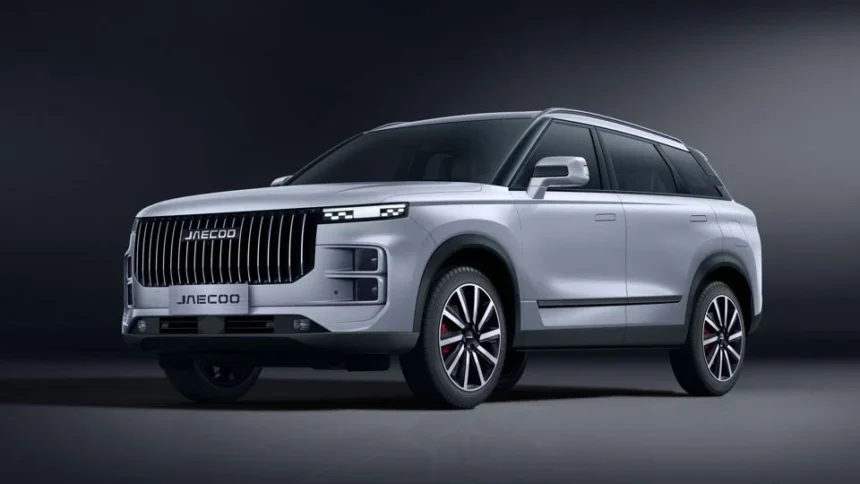

The debate over REEV Classification in Pakistan has intensified after customs authorities ruled that Range Extended Electric Vehicles (REEVs) will be treated as electric vehicles (EVs) for tax purposes. The decision has created division within Pakistan’s automobile sector, with local manufacturers raising concerns about policy fairness and market imbalance.
As reported by BOL News, the controversy centers on whether REEVs vehicles that use batteries for propulsion but also carry a fuel-powered generator should qualify for the same tax incentives as fully electric vehicles under Pakistan’s National Electric Vehicle Policy.
What Are REEVs?
Range Extended Electric Vehicles (REEVs) are a new category of “new energy vehicles” recently introduced in Pakistan’s auto market. These vehicles:
- Run entirely on electric batteries to power the wheels
- Include a fuel-powered internal combustion engine
- Have a fuel tank (usually over 40 liters)
- Use the engine only as a generator to recharge batteries
Unlike conventional hybrids, the engine in REEVs does not directly drive the wheels. Instead, it extends the driving range by charging the battery when its level drops.
Some newly launched REEV models claim a combined range of over 1,000 kilometers on a single tank and full battery charge, an attractive feature in Pakistan, where charging infrastructure remains limited.
REEV vs Plug-in Hybrid: What’s the Difference?
Understanding the REEV Classification in Pakistan requires comparing REEVs with plug-in hybrid vehicles (PHEVs).
Plug-in Hybrid Vehicles (PHEVs)
- Have both a battery and a fuel-powered engine
- The engine directly drives the wheels
- Run on battery for the first 40–50 km
- Emit exhaust gases during engine operation
Range Extended Electric Vehicles (REEVs)
- Wheels powered only by electric motors
- The engine works solely as a generator
- Extended range through battery recharging
- Still emits emissions when the generator operates
While both categories burn fuel and produce emissions, the key technical difference lies in whether the engine drives the wheels.
Customs Decision and REEV Classification in Pakistan
The controversy escalated when Pakistan Customs’ Classification Committee ruled that REEVs should be categorized as electric vehicles because the wheels are powered exclusively by batteries.
This REEV Classification in Pakistan means that these vehicles will benefit from tax exemptions offered to EVs under the government’s policy.
According to current regulations:
- Imported fully built EVs under 50 kW face 25% customs duty and 12.5% GST
- Locally assembled CKD EVs are exempt from federal excise duty
- CKD units pay only 1% GST and 10% duty on parts
With REEVs now considered EVs, importers could enjoy significant tax benefits.
Why Is the Auto Industry Objecting?
Several local auto manufacturers argue that the REEV Classification in Pakistan contradicts the National Electric Vehicle Policy.
The policy states that incentives apply only to:
Battery-powered vehicles that do not have an internal combustion engine.
Industry officials claim that REEVs clearly include combustion engines and therefore should not qualify for zero-emission benefits.
They warn that:
- It may distort competition in the new energy vehicle market
- Local manufacturers assembling EVs may suffer losses
- Imported REEVs could flood the market due to lower duties
Some also allege that certain REEV imports were categorized as plug-in hybrids in China but declared as EVs upon arrival in Pakistan.
Market Impact: Will It Distort the EV Sector?
The central concern in the REEV Classification in Pakistan debate is market distortion.
If REEVs receive tax exemptions while plug-in hybrids do not:
- Consumers may shift toward imported REEVs
- Local CKD EV assemblers could lose price competitiveness
- Policy consistency may be questioned
Critics argue that if REEVs qualify as electric, then plug-in hybrids should also be treated similarly since both emit gases when fuel is burned.
Will REEVs Increase EV Adoption in Pakistan?
Pakistan still faces major barriers to EV adoption:
- Limited charging stations
- Range anxiety among consumers
- Higher upfront vehicle prices
REEVs potentially address range anxiety by offering extended mileage through fuel-based charging. In theory, this could increase the adoption of new energy vehicles.
However, auto experts believe the impact may be limited. Since both REEVs and plug-in hybrids use fuel and emit gases, labeling one as fully electric may not significantly advance environmental goals.
The long-term success of EV adoption in Pakistan depends more on:
- Expanding charging infrastructure
- Policy clarity
- Incentives for local manufacturing
Environmental Concerns
Another dimension of the REEV Classification in Pakistan controversy is environmental credibility.
While REEVs primarily run on electricity, their engines still burn fuel and produce emissions. Critics argue that granting them zero-emission incentives could dilute Pakistan’s climate goals.
Supporters, however, say REEVs are a practical transition technology in countries where charging networks are underdeveloped.
Policy Consistency and Future Outlook
The debate over REEV Classification in Pakistan highlights broader challenges in implementing clean energy policies.
Key questions remain:
- Should EV incentives be based purely on propulsion method?
- Should emissions output determine classification?
- Should plug-in hybrids also receive equal tax treatment?
If the government maintains its current stance, REEV imports may increase in the short term. However, policymakers may need to revisit definitions to ensure transparency and fairness.
Range Extended Electric Vehicles
The REEV Classification in Pakistan has sparked a significant debate within the automotive industry. While customs authorities consider REEVs electric because their wheels are battery-powered, critics argue that the presence of a combustion engine disqualifies them from EV incentives.
As Pakistan pushes toward cleaner transportation, the government faces a delicate balance between encouraging innovation, protecting local industry, and maintaining environmental integrity.
The final impact of this decision will depend on future policy clarifications, market response, and infrastructure development. One thing is clear: the REEV debate has opened a new chapter in Pakistan’s evolving new energy vehicle landscape.