

In the midst of escalating conflicts in the Middle East, reports emerged on Monday about US planes shot down in Kuwait, sparking widespread speculation and concern. Initially, many in the region feared that the US planes shot down in Kuwait were victims of an Iranian assault, given the recent wave of attacks. However, official statements quickly clarified that this was not the case, attributing the incident to a tragic friendly fire mishap.
The tensions kicked off over the weekend when the United States and Israel launched coordinated strikes against Iran, prompting a swift retaliation from Tehran. Iran not only targeted Israel but also unleashed missile and drone barrages on several US-allied nations in the area.
Countries like Saudi Arabia, the United Arab Emirates, Kuwait, Bahrain, and others have strongly denounced these actions, asserting their right to self-defense. With US military presence in many of these nations, including bases and personnel, the news of US planes shot down in Kuwait added fuel to the already volatile situation.
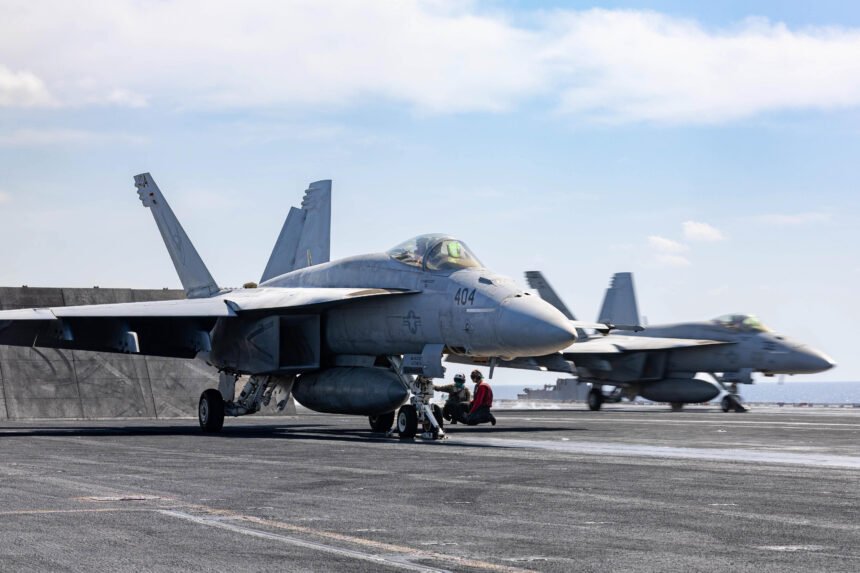
Contrary to initial suspicions, the US planes shot down in Kuwait were not hit by enemy forces. The US Central Command (CENTCOM) confirmed that three F-15E Strike Eagle aircraft were involved in what they described as a “friendly fire incident.” This occurred while the planes were engaged in operations tied to Operation Epic Fury against Iranian targets.
US Planes Shot Down in Kuwait
According to CENTCOM, during intense aerial engagements involving Iranian aircraft, ballistic missiles, and drones, Kuwaiti air defense systems erroneously targeted and brought down the US planes shot down in Kuwait.
The Kuwaiti Ministry of Defense issued a statement acknowledging the downing of the US aircraft, emphasizing that no crew members were seriously injured. They were promptly taken to a hospital for routine medical checks. Kuwait reiterated its commitment to collaborating with the US on investigating the causes behind the US planes shot down in Kuwait, highlighting the strong alliance between the two nations. With the probe now seemingly wrapped up, CENTCOM’s detailed release has shed more light on the sequence of events.
CENTCOM’s account specifies that the three F-15E Strike Eagles were actively participating in the operation when the mishap occurred. Fortunately, all six crew members ejected safely and are reported to be in stable condition. CENTCOM expressed gratitude to the Kuwaiti Defense Forces for their support during the ongoing operations, underscoring the importance of allied cooperation despite such setbacks.
This incident involving US planes shot down in Kuwait serves as a stark reminder of the risks in high-stakes military environments.
Delving into the aircraft itself, the F-15E Strike Eagle is a versatile fighter jet renowned for its dual-role capabilities in air-to-air and air-to-ground missions. As per the US Air Force’s official resources, this aircraft excels in low-altitude flights and can operate effectively around the clock, regardless of weather conditions.
Equipped with advanced APG-70 radar, it can detect and engage ground targets from considerable distances, making it a cornerstone of US aerial strategies. In the context of the US planes shot down in Kuwait, the loss of these advanced jets highlights potential vulnerabilities in coordinated allied defenses.
While the focus remains on the US planes shot down in Kuwait, broader questions arise about the regional fallout. For instance, what if escalating conflicts lead to the closure of the Strait of Hormuz, a critical chokepoint for global oil supplies? Such a scenario could disrupt international trade and energy markets significantly.
In related developments, violent protests in Pakistan’s Gilgit and Skardu regions have resulted in at least 23 deaths, prompting curfews and army deployment. On the Iranian front, discussions swirl around the selection process for Iran’s supreme leader and potential successors to Ali Khamenei following reports of his assassination in a US-Israeli operation that involved months of planning and precise intelligence.
The death of Ayatollah Khamenei could profoundly impact the Muslim world, potentially shifting power dynamics. Iran’s push for regime change has been viewed as a risky move that might undermine US President Trump’s credibility and alienate supporters. Khamenei’s rule was bolstered by hardline clerics and the Revolutionary Guards, whose influence may now wane.
Additionally, questions linger over US air defenses after Iran’s retaliatory strikes on American bases. Who was Ayatollah Seyyed Ali Khamenei, and how does his family’s legacy factor in? Tehran’s missile attacks on Middle Eastern allies appear to fulfill earlier threats, aiming to assert dominance and deter further aggression.
As per references from BOL News Pakistan, these interconnected events underscore the fragile balance in the region, with the US planes shot down in Kuwait incident exemplifying the perils of allied operations in contested airspace. Staying informed through reliable sources like BOL News helps contextualize these rapidly evolving situations.