
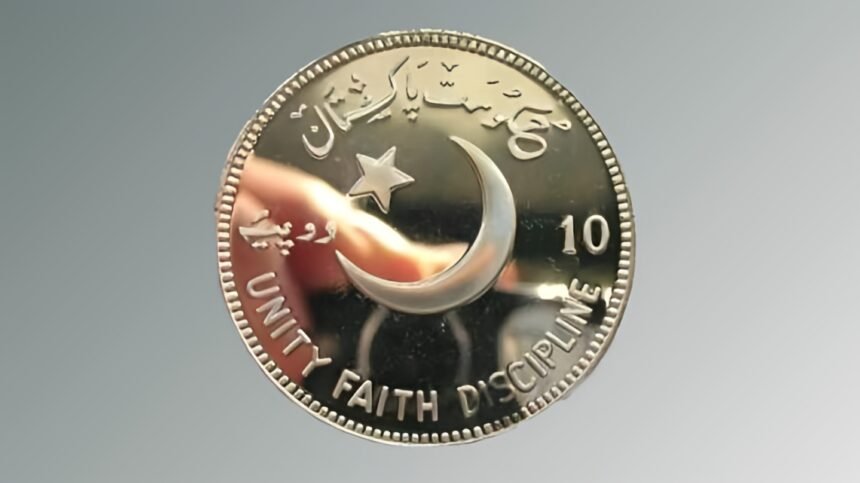

The federal government has started reviewing a proposal to introduce the Rs 10 coin in Pakistan as a replacement for the existing ten-rupee currency note. The proposal is currently under consideration for in-principle approval by the federal cabinet. Officials believe that replacing paper notes with coins will reduce currency management costs and improve the efficiency of the financial system.
A high-level committee led by the Finance Minister has submitted a detailed currency management report to the cabinet. The report has been prepared with the cooperation of the State Bank and the Security Printing Corporation, in accordance with official financial regulations. Adopting the Rs 10 coin could result in significant long-term savings for the national economy.
Major Cost Savings Expected
According to the currency management report, introducing the Rs 10 coin in Pakistan could save approximately Rs 40-50 billion over the next 10 years. These savings are mainly from reduced printing, replacement, and administrative costs associated with paper notes.
The report highlights that the annual cost of printing, distributing, and replacing Rs 10 notes is estimated between Rs 8 billion and Rs 10 billion. Since Rs 10 notes account for nearly 35 percent of the total currency notes printed each year, replacing them with coins would significantly reduce recurring expenses.
Although the initial production cost of the Rs 10 coin in Pakistan is higher than that of printing paper notes, coins last much longer and do not need frequent replacement. This makes coins a more economical option in the long run.
Lifespan Difference Between Coins and Notes
One of the main reasons behind the proposal is the short lifespan of the Rs 10 note. According to the report, a typical Rs 10 currency note lasts only about six to nine months due to frequent handling and wear.
In comparison, the Rs 10 coin in Pakistan can remain in circulation for 20 to 30 years. This long lifespan makes coins a durable and cost-effective solution for low-value currency.
Replacing notes with coins will reduce waste and improve the currency’s durability nationwide.
Gradual Phase-Out of Rs 10 Notes
The proposal recommends a gradual elimination of the Rs 10 currency note over a period of three years. During this time, the State Bank would slowly reduce the printing of paper notes while increasing the supply of the Rs 10 coin in Pakistan.
Officials say that the phase-out process will follow legal procedures under the State Bank Act. This approach will allow businesses and the public to adjust smoothly to the new currency format.
The 10-rupee coin was first introduced on October 24, 2016, and has already been in circulation alongside paper notes. The new plan aims to make the coin the primary form of Rs 10 currency in Pakistan.
International Examples of Coin-Based Currency
Many countries around the world have successfully replaced low-value currency notes with coins. Nations such as the United Kingdom, Canada, and Australia have adopted similar policies to reduce currency management costs.
Following these international practices, the Rs 10 coin Pakistan initiative is expected to improve efficiency and bring Pakistan’s currency system closer to global standards.
Environmental Benefits of Coins
Reducing the printing of paper currency is also considered an important step toward environmentally friendly banking. Paper currency requires large amounts of raw materials and energy for production.
By promoting the Rs 10 coin in Pakistan, authorities aim to support green banking initiatives. Coins reduce paper waste and minimize the environmental impact of currency production.
Future Outlook
If approved by the federal cabinet, the Rs 10 coin plan could mark an important change in the country’s currency system. The move is expected to reduce long-term costs, improve durability, and support environmentally responsible financial practices.
The gradual replacement of Rs 10 notes with coins would help strengthen Pakistan’s currency management while providing a more sustainable solution for everyday transactions.