

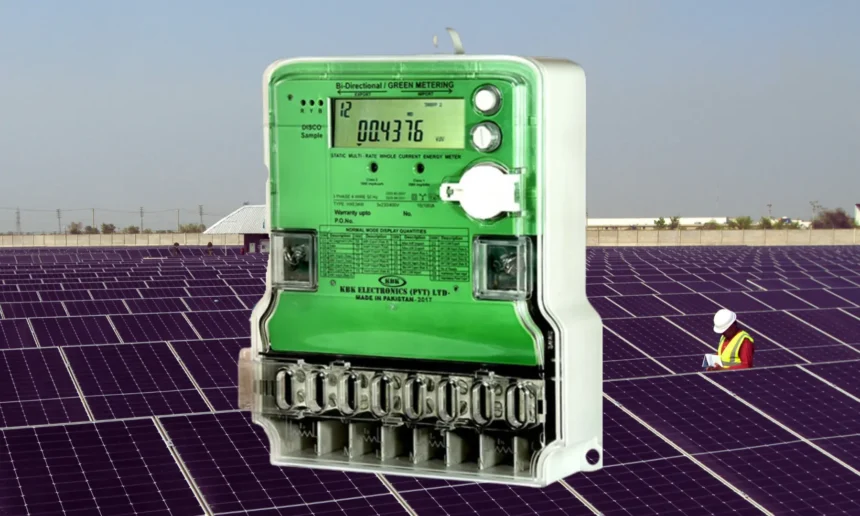

The Pakistan Solar Net Billing system has become a major topic of debate after the Overseas Investors Chamber of Commerce and Industry (OICCI) expressed serious concerns about the revised policy. According to reports highlighted by BOL News Pakistan, the new framework has significantly reduced financial incentives for solar users and may discourage future investment in renewable energy.
The OICCI stated that recent changes to the Pakistan Solar Net Billing policy have shifted the financial burden onto solar consumers while failing to solve long-standing problems in the country’s power sector. Investors believe that instead of addressing inefficiencies such as power theft and distribution losses, the revised rules mainly target solar users who contribute only a small share of electricity to the national grid.
Major Reduction in Solar Buyback Rates
One of the biggest concerns under the revised Pakistan Solar Net Billing framework is the sharp reduction in the solar electricity buyback rate. The rate has been reduced to Rs. 8.13 per unit, which represents a decrease of about 68 percent compared to previous rates.
This significant cut means solar consumers will now receive much less compensation for excess electricity supplied to the national grid. As reported by BOL News Pakistan, this change could reduce the financial attractiveness of installing rooftop solar systems.
Experts warn that the revised Pakistan Solar Net Billing structure may increase the payback period for solar investments, making it less appealing for households and businesses to switch to renewable energy.
Urban Solar Users Face Higher Costs
The OICCI pointed out that cities like Lahore and Multan account for more than one-third of solar net metering users in the country. Under the new Pakistan Solar Net Billing model, urban solar consumers face a major imbalance between export and import electricity rates.
According to estimates, solar users must now export nearly seven units of electricity to offset the cost of importing one unit during peak hours. This pricing gap makes it difficult for solar consumers to recover their investment costs.
Investors believe that the updated Pakistan Solar Net Billing framework discourages urban households that invested in solar energy to reduce electricity expenses and contribute to clean energy production.
Solar Users Contribute Very Little to Grid Energy
The OICCI emphasized that solar net metering consumers contribute only 0.32 percent of total grid electricity, yet they are being subjected to stricter pricing measures.
Despite the small share of solar energy in the overall electricity mix, the revised Pakistan Solar Net Billing policy places a disproportionate burden on solar consumers.
Industry experts say solar energy helps reduce peak demand and lowers pressure on the national grid. However, the new pricing structure may slow the growth of rooftop solar installations across Pakistan.
Power Sector Losses Remain a Major Issue
The OICCI also highlighted that Pakistan’s electricity distribution companies are facing major financial losses. According to data cited by BOL News Pakistan, distribution companies are dealing with losses exceeding Rs. 399 billion.
Additionally, electricity theft and system inefficiencies have resulted in total losses of approximately Rs. 734 billion. The chamber believes these structural issues should be addressed instead of reducing solar incentives.
Critics argue that the revised Pakistan Solar Net Billing policy forces solar households to absorb part of the financial losses caused by inefficiencies in the power sector.
Financial Burden on Solar Consumers
The widening gap between low export credits and high retail electricity tariffs has created a financial imbalance for solar users. Many households now find that exporting electricity to the grid provides limited financial benefit.
The OICCI warned that the revised Pakistan Solar Net Billing structure may slow the adoption of renewable energy and reduce investor confidence in Pakistan’s energy sector.
Solar consumers who invested heavily in rooftop systems may face longer recovery periods, making solar energy less financially viable than before.
OICCI Recommendations for Improvement
To improve the situation, the OICCI suggested several measures that could strengthen the electricity system while supporting renewable energy growth.
The chamber recommended making hybrid battery storage systems mandatory to help manage peak electricity demand. Battery storage can allow solar users to store excess electricity and use it during peak hours instead of relying on the grid.
The OICCI also recommended faster deployment of Advanced Metering Infrastructure (AMI) and Supervisory Control and Data Acquisition (SCADA) systems. These technologies would allow real-time monitoring of electricity usage and help reduce theft and technical losses.
Another key recommendation is to ensure that installed solar capacity matches approved electricity loads. This would help maintain grid stability and prevent technical problems in distribution networks.
Future of Solar Energy in Pakistan
The future of solar energy depends heavily on how the Pakistan Solar Net Billing framework evolves. While solar energy remains one of the cheapest electricity sources in Pakistan, policy uncertainty may discourage new investments.
Energy experts believe that balanced policies are needed to support both renewable energy growth and power sector reforms. If properly managed, solar energy can reduce electricity shortages, lower consumer bills, and improve environmental sustainability.
According to BOL News Pakistan, investors are urging policymakers to revise the Pakistan Solar Net Billing policy in a way that supports solar adoption while addressing inefficiencies in the power distribution system.
A stable and investor-friendly solar policy will be essential for Pakistan’s transition toward affordable and sustainable energy in the coming years.