


The UK car market just delivered one of its strongest months in years, and electric vehicles were at the center of it. UK EV registrations climbed to nearly 30 percent of all new car sales in June, a milestone that shows just how quickly electric driving is becoming the normal choice rather than the alternative one. For anyone following the UK car industry, this month’s numbers are worth a closer look, because they tell a story that goes beyond a single strong month.
At BOL Automotive, we track these shifts closely because they affect real buying decisions, not just industry headlines. This article breaks down what actually happened with UK EV registrations in June, why Tesla staged such a sharp comeback, and what it all means going forward.
UK EV Registrations Reach Nearly 30 Percent of the Market
New figures show that battery electric vehicles accounted for around 64,440 units in June, which works out to almost 30 percent of the 215,921 total new cars registered that month. This is a jump from roughly 27 percent in May, and it marks one of the strongest performances for UK EV registrations outside the usual seasonal peaks in March and September.
What makes this number stand out is that it did not come at the expense of the wider market. The overall new car market grew by 15 percent year on year, and electric vehicles did most of the heavy lifting behind that growth. In simple terms, people are not just switching from petrol to electric within a shrinking market. More people are buying cars overall, and a growing share of them are choosing electric.
This matters because it changes the usual argument around electric vehicle adoption. For a long time, EV growth in the UK was seen as a slow shift supported mainly by fleet buyers and government targets. June’s UK EV registrations numbers suggest that private demand is now playing a much bigger role.
Why Tesla Bounced Back with a 42 Percent Jump
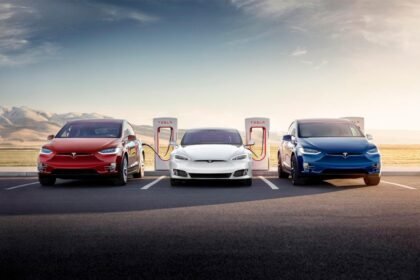
Tesla registered 12,403 electric vehicles in the UK in June, a 42 percent increase compared to the same month last year. On the surface, this looks like a dramatic turnaround for a brand that had been struggling across Europe for much of the year.
The context matters here. Tesla went through a rough start to 2026, with UK sales dropping by as much as 57 percent in January as demand weakened sharply. The brand also saw a steep fall in European Union registrations during that period, even as the broader electric vehicle market kept expanding. So while a 42 percent rebound sounds impressive, it is partly a recovery from a very low starting point rather than a sign that Tesla has reached new heights.
Two things helped Tesla turn things around. The first is a refreshed Model 3 and Model Y lineup, which gave buyers a reason to look at the brand again after a long stretch without major updates. The second is aggressive pricing, with Tesla cutting costs to win back customers who had drifted toward rivals. Together, these changes pulled Tesla back toward its earlier UK volumes, even if it has not broken new ground.
BYD Continues to Grow, but at a Slower Pace
BYD registered 2,999 vehicles in the UK in June, up 9 percent from the previous year. That is steady growth, but it is a noticeable slowdown compared to the triple-digit percentage gains BYD was posting earlier in the year, back when it was still building its UK dealer network from almost nothing.
Even with Tesla’s strong month, BYD’s UK volume remains far smaller than Tesla’s. Tesla’s 12,403 units in June dwarf BYD’s total, showing that while BYD has real momentum across Europe as a whole, Tesla still holds a bigger single-brand presence in Britain, at least for now.
It is also worth remembering that this is not really a two-brand story. Looking at UK EV registrations by manufacturing group rather than individual brand, Volkswagen Group leads with around 20 percent share so far this year, followed by Hyundai and Kia at roughly 10 percent. Tesla sits close behind at just under 10 percent, with Stellantis and BMW not far off either. BYD, despite the attention it gets, ranks eighth among groups. Framing the market as simply Tesla versus BYD misses most of what is actually happening.
What Is Driving the Rise in UK EV Registrations
A few clear factors are behind this month’s strong UK EV registrations figures.
Rising fuel prices are a major issue. Global oil price pressure, linked partly to tensions around Iran, has pushed petrol and diesel costs higher across the UK. That shifts the everyday math for buyers comparing the running costs of an electric car against a traditional one.
Closing price gaps is helping too. Many new electric models are now reaching price parity with their petrol equivalents, and the used electric car market is becoming genuinely affordable for buyers who previously felt priced out of going electric.
Wider model choice also plays a part. Compared to just a few years ago, UK buyers now have far more electric options across nearly every price bracket and body style, from small city cars to larger family vehicles.
Government support through grants and incentives continues to nudge buyers toward electric, even as the broader ZEV Mandate targets push manufacturers to supply more electric models regardless of demand.
How This Compares to the Rest of Europe
The UK’s nearly 30 percent share of electric vehicles puts it well ahead of the wider European picture. Across the EU, EFTA, and UK region combined, battery electric share sat at around 19.7 percent year to date through April. That gap shows the UK is moving faster than many of its neighbors when it comes to electric adoption, even though other European markets like Germany, France, and Italy have also seen strong electric growth at times this year.
This also puts pressure on the narrative that the UK is lagging on climate and transport targets. While there is still a gap between actual UK EV registrations and the ZEV Mandate’s yearly targets, the direction of travel is clearly upward, and June’s figures suggest the pace may be picking up rather than slowing down.
What This Means for Buyers
If you are considering an electric car, June’s numbers are a useful signal. More competition among brands generally means better pricing and stronger offers, and Tesla’s aggressive price cuts this year are a good example of that. A wider range of models also means it is easier to find an electric car that actually fits your budget and daily needs, rather than settling for whatever was available a few years ago.
It is also worth watching how rising fuel prices affect the calculation for your own driving habits. For higher mileage drivers, especially, the gap in running costs between petrol and electric continues to widen in favor of electric vehicles, and that gap is likely to remain a key reason behind future growth in UK EV registrations.
Looking Ahead
June’s results do not guarantee that UK EV registrations will keep climbing at the same pace every month. Single months can be shaped by short-term factors, including the usual end-of-quarter push from manufacturers trying to hit sales targets. Even so, the bigger picture is hard to ignore. Electric vehicles are no longer just nibbling away at a shrinking petrol and diesel market. They are becoming a genuine driver of overall growth in UK car sales.
Tesla’s rebound adds an interesting subplot, but the real story of June is broader than any single brand. UK EV registrations reaching close to 30 percent share, alongside a growing overall market, points to an industry that is shifting faster than many expected even a year ago. Whether this pace continues will depend on fuel prices, model availability, and how quickly charging infrastructure keeps up with demand, but for now, the direction is clear, and the momentum is real.