
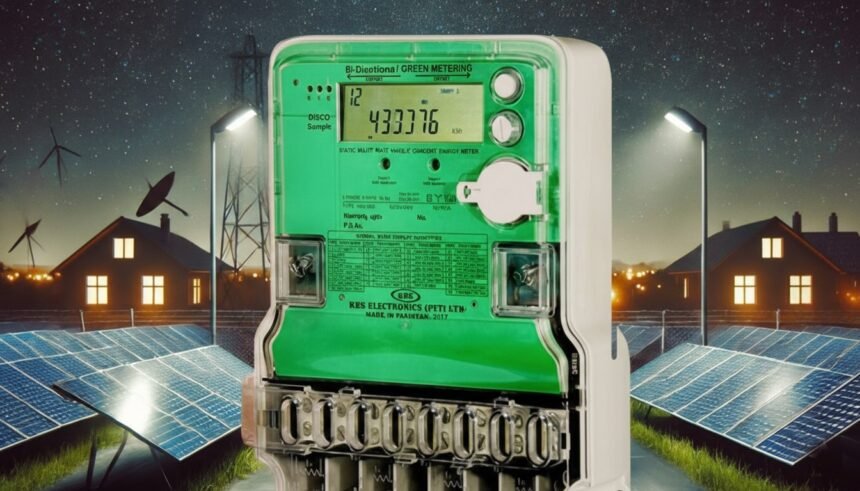

According to the BOL News, Pakistan’s new solar net metering policy has created widespread concern among homeowners, businesses, and the entire renewable energy sector. The long-awaited regulatory shift has officially ended the popular net metering system and introduced a net billing mechanism that significantly reduces the financial benefits of installing solar panels.
This comprehensive change aims to address the power sector’s mounting financial challenges, but has left many existing solar users worried about their future savings and returns on investment.
The core change under Pakistan’s new solar net metering policy is the complete abolition of the old unit-for-unit net metering arrangement. Previously, solar panel owners could export excess electricity to the national grid and receive credit at the same rate they paid for consumption, often up to Rs 25 per unit.
Now, under the net billing system, electricity distribution companies will purchase surplus power from consumers at a much lower fixed rate of Rs 8.13 per unit. This represents a reduction of more than two-thirds in the compensation rate, making solar installations far less attractive financially than they were just a few months ago.
This dramatic policy shift applies immediately to all new solar connections nationwide. However, the regulations also have serious implications for the 466,000 existing solar net metering consumers who signed seven-year agreements starting from the system’s launch in 2015. As these contracts begin to expire, consumers must renew under the new terms, meaning even long-time solar users will soon face the reduced buy-back rates and stricter billing cycles.
One of the most significant changes in Pakistan’s new solar net metering policy is the reduction of the contract duration from 7 years to 5 years. This creates greater uncertainty for investors who previously enjoyed longer-term stability. Additionally, the adjustment of exported electricity credits will now happen every three months instead of monthly, further delaying financial relief for solar households and businesses that rely on timely bill offsets.
The rate disparity has become particularly stark. While solar consumers will now sell their excess power for only Rs 8.13 per unit, they continue to purchase electricity from distribution companies at peak rates of Rs 35-50 per unit. This massive gap means that even consumers who invested millions of rupees in high-quality solar systems may struggle to recover their costs or achieve meaningful monthly savings under the revised framework.
Power Division officials have defended Pakistan’s new solar net metering policy as a necessary step to protect the financial health of the national power sector. They point out that rapid growth in solar generation has already reduced grid electricity sales by 3.2 billion units, causing billions in annual revenue losses for distribution companies.
At the same time, the government remains obligated to make massive capacity payments to Independent Power Producers (IPPs), which reached Rs 2,000 billion in a single year. Officials fear that unchecked on-grid solar growth could push distribution company losses to Rs 550 billion in the coming years.
The policy has also triggered intense political debate. During parliamentary sessions, both opposition parties and members of the ruling coalition, including the Pakistan Peoples Party, strongly criticized the move. Media experts highlighted the potential damage to Pakistan’s growing solar industry, prompting Prime Minister Shahbaz Sharif to take immediate notice.
In response, the Prime Minister directed the Power Division to file an urgent appeal with NEPRA specifically to safeguard the existing contracts of current solar consumers. A statement from the Prime Minister’s Office emphasized that the burden of supporting 466,000 solar beneficiaries should not fall on the more than 37.6 million consumers who rely entirely on the national grid.
A high-level meeting chaired by the Prime Minister, attended by Deputy Prime Minister Ishaq Dar and several federal ministers, resulted in instructions for the Power Division to prepare a comprehensive action plan.
Despite the Prime Minister’s intervention, many industry observers remain cautious. The official statement focuses primarily on protecting current contracts rather than reversing the core changes in Pakistan’s new solar net metering policy. The language describing solar consumers as a potential “burden” on the system has raised fears that even renewing consumers may not receive the same generous terms they enjoyed previously.
The broader implications of this policy shift extend far beyond individual bill savings. Pakistan has already imported solar infrastructure capable of generating 32,000 MW, yet on-grid solar currently produces only 6,500 MW while off-grid systems account for another 12,000 MW. Experts warn that discouraging on-grid connections could accelerate the switch to fully off-grid battery-based systems. Early signs of this trend are already visible, with battery imports rising noticeably as households prepare for reduced reliance on the national grid.
If large numbers of solar users disconnect from the grid and move to battery storage for nighttime use, the demand for conventional electricity will drop even further. This scenario would increase the per-unit burden of capacity payments on the remaining 45 million grid-dependent consumers, potentially leading to higher electricity tariffs for everyone in the long run.
The biogas sector will also feel the impact, as the new regulations explicitly extend to biogas-based electricity producers. This unified approach aims to create consistency across different renewable technologies, but adds another layer of complexity for investors in alternative green energy projects.
Many solar industry stakeholders argue that a more balanced approach is needed. While acknowledging the genuine financial pressures facing the power sector, they emphasize that solar energy remains crucial for reducing Pakistan’s dependence on expensive imported fuels and meeting growing electricity demand sustainably.
The coming months will be critical as existing contracts expire and consumers decide whether to renew under the new terms or transition to off-grid solutions. The government’s ability to implement protective measures for current users while maintaining the new framework for future connections will determine whether Pakistan’s solar sector continues its impressive growth trajectory or faces a significant slowdown.
Pakistan’s new solar net metering policy represents one of the most substantial regulatory changes in the country’s renewable energy landscape since the system’s introduction in 2015. As the situation evolves, consumers are advised to review their current contracts carefully, consult with their distribution companies, and explore all available options before making decisions about their solar investments.
The coming weeks and months will reveal whether the government can strike the delicate balance needed to protect both the power sector’s finances and the future of clean energy adoption in Pakistan.