

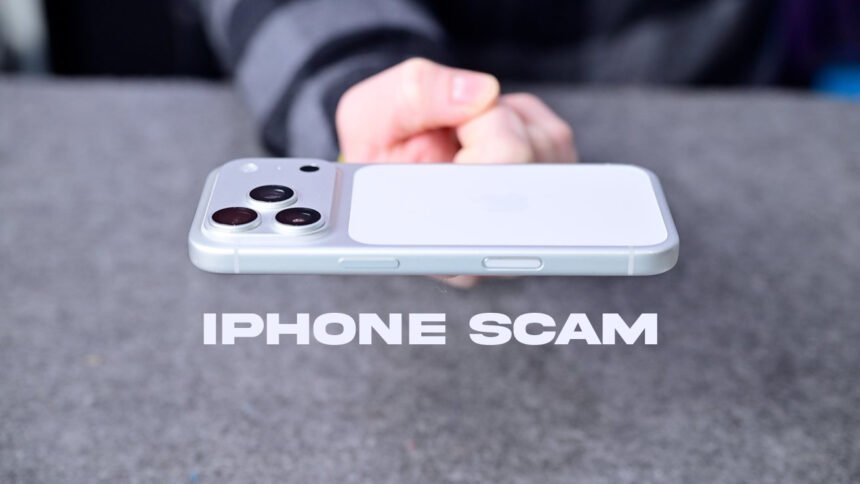

A single missing iPhone has turned into something much bigger. What started as one man’s complaint about a phone that never reached him has now triggered a nationwide investigation into an iPhone scam that may be running through courier and customs channels across the country.
If you have ever ordered a phone from abroad, or you are thinking about it, this story matters to you. It shows how an iPhone scam can quietly strip a buyer of a device they already paid full duty on, and it shows why regulators are now worried this is not an isolated incident.
How the iPhone Scam Came to Light
The case began with a complaint filed by Muhammad Nausherwan Khan. His sister in Canada sent him an iPhone 16 Plus through FedEx back in December 2024.
When the handset arrived in Karachi, Khan paid the PTA tax of Rs138,526, exactly what was owed. That should have been the end of it. Instead, he says the phone never made it into his hands.
He later found out that a forged authority letter had apparently been used to release his device to someone else entirely. This is the heart of the iPhone scam that Pakistan’s Federal Tax Ombudsman is now trying to unravel.
The Federal Tax Ombudsman Steps In
Federal Tax Ombudsman Zafar Hijazi reviewed the complaint and did not treat it as a one-off mistake. In an order released on Tuesday, he described a coordinated scheme that left a lawful, duty-paid consignee without his phone for more than a year and a half.
That is a long time to be chasing a device you already paid for. It also raises an obvious question. If it happened this cleanly once, how many other people have quietly lost phones the same way without ever filing a complaint?
Why Customs Records Tell a Different Story
During the proceedings, Customs officials defended their actions. They said the phone was released only after verifying the original detention receipt, the invoice, and other documents presented by a clearing agent.
On paper, that sounds like due process. But the Ombudsman pushed back with a simple and pointed question. Why was the actual complainant, whose name never changed on the import documents, denied his own phone even after personally showing up to claim it?
The answer appears to lie in a detail that is easy to miss if you are not looking closely. While the consignee’s name stayed the same in the tracking records and import paperwork, the address and contact details had allegedly been swapped out for someone else’s information on the airway bill and invoice. That is not a clerical slip. It looks like a targeted iPhone scam built around exploiting exactly this kind of paperwork gap.
Why This Looks Like an Organised Scheme, Not a One-Off Error
The Ombudsman was direct about this point. He said the manipulation of contact details pointed to an organised scam, and that the pattern behind it could not simply be brushed aside as an administrative error.
Think about what this actually requires. Someone needs access to shipment data, the ability to alter contact details on a live shipment, and enough familiarity with clearance procedures to make a forged authority letter pass as legitimate. That is not something a random opportunist pulls off. It suggests insider knowledge somewhere along the chain, whether at the courier company, inside customs, or through a clearing agent acting in bad faith.
The Case Was “Resolved,” But the Investigation Isn’t Over
Here is the part that really signals how seriously this is being taken. Khan eventually told the Ombudsman that his individual grievance had been sorted out in most complaint systems, which would close the file.
Instead, the Ombudsman decided to keep pursuing the wider issue. He said the suspected iPhone scam needed a full investigation to protect the broader public interest, not just the one person who happened to complain loudly enough to get a resolution.
That decision is worth sitting with. It means regulators suspect this iPhone scam did not stop with one shipment, and that plenty of other importers may have lost their phones the same way without ever getting them back.
What the FBR Has Been Asked to Do
The Ombudsman laid out a specific set of recommendations for the Federal Board of Revenue, and they are worth listing because they show how far this iPhone scam probe could reach.
- Direct the Chief Collector of Customs at the airports to open a targeted inquiry into FedEx’s role in these shipments
- Pull courier import data covering January 2025 through June 2026 to check for similar cases
- Investigate how forged authority letters were used to redirect deliveries
- Examine whether any Customs officials facilitated the scheme, knowingly or otherwise
- Begin legal and disciplinary action wherever the evidence supports it
That date range matters. Requesting eighteen months of import data is not the move you make if you think this was a one-off. It is the move you make when you suspect a pattern and want the numbers to confirm or rule it out.
A Uniform SOP Could Close the Loophole
Beyond the investigation itself, the Ombudsman recommended something structural. He wants a uniform standard operating procedure for courier clearances introduced at all international airports.
This is the part that could actually prevent the next iPhone scam rather than just punishing the last one. Right now, if procedures vary from one airport to another, or from one clearing agent to another, it creates exactly the kind of inconsistency that bad actors can exploit. A single, enforced standard for verifying consignee identity before release would remove a lot of that wiggle room.
What This Means If You Are Importing a Phone
If you are waiting on a phone shipped from abroad, or you plan to have a friend or relative send you one, this iPhone scam story is a useful reminder to stay alert. A few practical habits can help.
Keep a close eye on tracking updates yourself rather than relying only on the sender. Small changes in contact information on a shipment are hard to notice unless you are the one checking.
Ask the courier directly for confirmation of who the listed contact and address are once the shipment reaches your city. If anything looks off, raise it immediately rather than assuming it will sort itself out.
Keep every receipt, including your tax payment record and the original invoice. Khan’s case was only resolved because he had documentation proving he was the rightful, duty-paying consignee.
If a shipment goes missing or gets delayed without explanation, do not wait a year and a half to escalate it the way this case did. File a complaint with the courier and, if needed, with the Federal Tax Ombudsman’s office early.
The Bigger Picture
This BOLNews Exclusive look at the case shows something that goes beyond one missing phone. It shows how a well-organised iPhone scam can hide inside routine paperwork, using small, deliberate edits to contact details that most people would never think to check.
Whether the wider investigation uncovers dozens of similar cases or just a handful remains to be seen, and it would be premature to assume the scale before the FBR’s inquiry is complete. What is clear already is that regulators are not treating this as a closed matter, and that alone should reassure importers that scrutiny is increasing.
For now, the safest approach for anyone bringing an iPhone into the country is simple vigilance. Track your shipment closely, verify your own details at every stage, and do not assume that paying your taxes correctly is enough to guarantee your phone actually reaches you. This case proves it is not always that straightforward, and until the courier and customs system tightens its checks, buyers are the ones who need to stay a step ahead.