

Article Highlights
- Epstein survivors say Lesley Groff gave false statements to the House Oversight Committee on June 9.
- Multiple Epstein survivors claim they met Groff in person, despite her testimony saying otherwise.
- Epstein survivors allege Groff handed them cash payments in envelopes on Epstein’s behalf.
- Some Epstein survivors say Groff clearly knew their ages, including one abused while still in school.
- Lawmakers are now reviewing Groff’s testimony as Epstein survivors push for real accountability.
A new wave of accounts from Epstein survivors is raising serious questions about the honesty of one of Jeffrey Epstein’s closest aides. Lesley Groff, who worked as his personal assistant for eighteen years, appeared before the House Oversight Committee last month and answered questions about her role inside Epstein’s operation.
According to several Epstein survivors who later spoke to CNN, much of what Groff told lawmakers does not match what they experienced firsthand.
This report breaks down the claims Epstein survivors have made, compares them with Groff’s testimony, and explains why this matter is drawing fresh attention from members of Congress.
What Lesley Groff Told Congress
During her transcribed interview on June 9, Groff told the House Oversight Committee that she never personally met any of the girls or young women who were brought in to give massages to Epstein. She also said she did not know their backgrounds, including how old they were at the time. Groff further stated that she never handed money directly to anyone connected to Epstein, saying her role was limited to arranging pickups or deliveries of cash on occasion.
She also claimed she was not present inside Epstein’s New York townhouse between 2001 and 2013, and told lawmakers she never handled or viewed any passports belonging to the girls and women involved.
Epstein Survivors Push Back on the Testimony
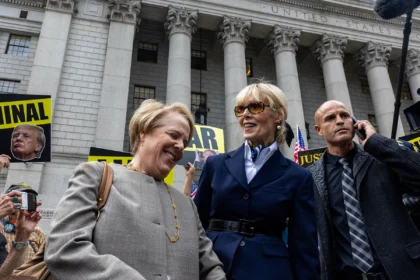
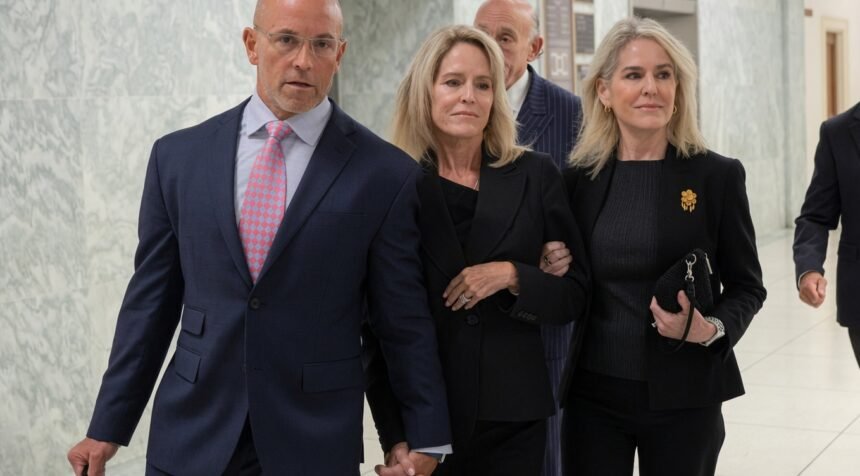
Epstein survivors who spoke with CNN, including four women who identified themselves publicly and two who chose to remain anonymous, described a very different reality. They said Groff was a familiar and constant presence in Epstein’s daily operations, not someone on the outside looking in.
Marina Lacerda, one of the Epstein survivors who came forward, said she began seeing Groff regularly not long after she first met Epstein in 2002, when she was just a young teenager. She described Groff as someone who asked detailed questions about new girls being brought into the circle, including their appearance, age, and background.
Another Epstein survivor, Sharlene Rochard, said she met Groff on multiple occasions in different locations tied to Epstein’s operation. A third survivor, Lara Blume McGee, said she encountered Groff inside Epstein’s townhouse at least twice during the same years Groff told Congress she was barred from entering the property.
Claims About Payments to Epstein Survivors
One of the most direct contradictions raised by Epstein survivors involves cash payments. Groff told the committee she never personally paid anyone connected to Epstein and that her involvement was limited to arranging for money to be picked up or delivered by someone else.
Several Epstein survivors dispute this account. Lacerda said Groff would often place one hundred-dollar bills inside long white envelopes and hand them over personally, particularly when Epstein was traveling.
Another anonymous survivor said she and other girls would regularly go to Groff to collect money every few days. These Epstein survivors say the payments were a routine part of their interactions with Groff and were not handled through any third party, as Groff described.
Did Groff Know the Girls Were Underage
Perhaps the most serious dispute centers on whether Groff understood that many of the girls being brought to Epstein were minors. Groff told lawmakers she had no idea about the ages of the girls and women involved.
Epstein survivors strongly disagree. One anonymous woman said she attended a private Catholic school and that Groff would regularly ask her to leave classes early to see Epstein. She said Epstein liked seeing her in her school uniform and that Groff saw her dressed that way on several occasions, making it clear she understood the woman was still a student.
Rochard added that she and other Epstein survivors gave Groff their passports and identification information so she could book their flights, information that would have shown their real ages. One woman said Groff personally helped her complete a passport application inside Epstein’s New York office, sitting with her while she filled out the paperwork.
This directly contradicts what Groff told Representative Suhas Subramanyam during the hearing, when she was asked whether she had ever handled or seen the passports of the girls and women involved. Groff said she had not, though she acknowledged she may have glimpsed a photograph of a passport at some point.
Congress Responds to the Epstein Survivors’ Claims
The accounts from Epstein survivors have prompted a reaction from members of the House Oversight Committee. A spokesperson for the panel said the committee is currently comparing Groff’s transcript against the evidence that has been gathered so far and is open to receiving any additional material that could support or challenge her statements.
Sara Guerrero, communications director for the committee’s top Democrat, Representative Robert Garcia, said Groff clearly understood what was happening inside Epstein’s circle and criticized the decision not to require her to testify under oath. Representative Suhas Subramanyam echoed similar concerns, noting that Groff’s account appears to be directly contradicted by multiple Epstein survivors and suggesting she should come forward truthfully or face possible legal consequences.
It is worth noting that knowingly giving false statements to Congress is considered a federal crime under US law, provided the statements are proven to be material and willful.
Why This Matters for Epstein Survivors Seeking Accountability
For many Epstein survivors, Groff’s testimony is just the latest example of people close to Epstein avoiding real consequences. Ghislaine Maxwell remains the only person convicted in the United States in connection with Epstein’s abuse network, and the Department of Justice has stated there is not enough evidence to pursue charges against other associates, even after reviewing new material.
Epstein survivors who spoke to CNN say they understand that proving some of their claims will be difficult since many of the events took place more than two decades ago, before smartphones and digital records became common. Still, they feel it is important to speak up whenever testimony given to Congress does not match what actually happened.
Their hope, shared by many Epstein survivors, is that continued pressure will eventually lead to a broader and more thorough investigation into everyone who played a role in Epstein’s operation rather than allowing individual accounts to go unchallenged.
My Opinion on Epstein survivors
The accounts shared by Epstein survivors paint a picture that is difficult to reconcile with what Lesley Groff told lawmakers. From claims of in-person meetings and cash handoffs to detailed knowledge of the victims’ ages, the gap between her testimony and what survivors describe is significant. As the House Oversight Committee reviews the transcript against outside evidence, Epstein survivors continue to call for a full and honest accounting from everyone who worked closely with Epstein over the years.
BOL World News will continue to follow this story as new developments emerge.
Source Reference: CNN Politics