
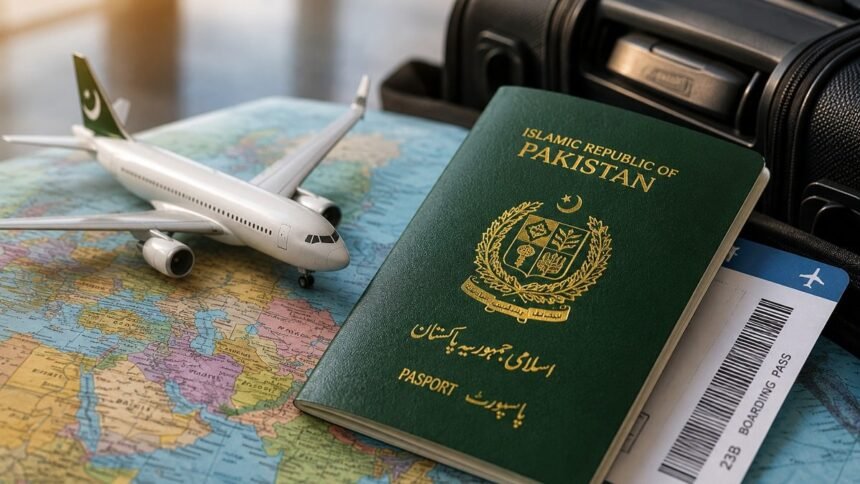

If you have ever stood in a visa office in Karachi or Lahore with a folder full of bank statements, hotel bookings, and an invitation letter to apply for a short trip abroad, you already understand the story behind this headline. The Pakistani passport ranks among the four weakest travel documents on earth, according to the Henley Passport Index, and this reality shapes daily life for millions of citizens in ways that go far beyond travel convenience.
I have spent years covering immigration, travel, and mobility issues for South Asian audiences, and one thing stands out every time this ranking is published. People are not just curious about numbers. They want to know what it actually means for their next visa application, their child’s study abroad plans, or their job offer in the Gulf. This article breaks down the facts, the context, and the practical implications, without the panic or the exaggeration that often surrounds this topic online.
Where the Pakistani Passport Ranks in 2026
According to the Henley Passport Index, the global authority that tracks travel freedom for passport holders worldwide, Pakistan sits near the very bottom of the list. The Pakistani passport ranks 98th out of roughly 101 to 103 ranked countries in the early 2026 edition, tied with Yemen. Only Iraq, Syria, and Afghanistan rank lower.
This is where the “fourth weakest” description comes from. When people say the Pakistani passport ranks fourth from the bottom, they mean exactly this: three countries, Afghanistan, Syria, and Iraq, are the only ones with less travel freedom than Pakistan on this particular list.
It is worth noting that Henley updates its index twice a year, in January and again around July. Rankings can shift slightly between these editions depending on new visa agreements signed or cancelled around the world.
Some mid-year data from 2026 placed Pakistan closer to 100th out of 103, with access to around 30 destinations, a small dip from the 31 destinations recorded earlier in the year. These fluctuations are normal and do not change the bigger picture: the Pakistani passport ranks consistently near the bottom of global mobility charts.
How the Henley Passport Index Actually Works
Henley and Partners, a global citizenship and residence advisory firm, has published this index since 2006 using data from the International Air Transport Association. The methodology is fairly simple to understand once you break it down.
Each passport gets a score based on how many destinations its holders can enter without a prior visa. This includes countries offering pure visa-free entry, visa on arrival, or electronic travel authorization. The more destinations a passport allows entry to without pre-approval, the higher it ranks.
Singapore has held the top spot for years, with its citizens able to access 192 destinations freely. Japan, South Korea, and the United Arab Emirates typically follow close behind. Meanwhile, the Pakistani passport ranks near the opposite end, allowing entry to roughly 30 to 32 countries depending on the specific edition of the index.
Why the Pakistani Passport Ranks So Low
This is the question I get asked most often, and the honest answer involves several overlapping factors rather than one single cause.
Diplomatic Relationships and Bilateral Agreements
Visa-free access is built through decades of bilateral negotiation between countries. Nations with stable, long-standing diplomatic ties and strong trade relationships tend to sign more reciprocal visa waiver agreements. Pakistan’s diplomatic focus has historically prioritized a smaller set of relationships, which limits the number of these agreements compared to countries like Singapore or the UAE that have aggressively pursued travel partnerships.
Security and Migration Concerns
Receiving countries assess overstay risk, irregular migration patterns, and security concerns when deciding whether to grant visa-free access. Rightly or wrongly, Pakistan’s regional security environment and past migration trends factor into these decisions by foreign immigration authorities.
Political and Economic Stability
Passport strength often mirrors a country’s perceived political stability and economic outlook. Countries experiencing political uncertainty or economic strain generally see slower progress in expanding their citizens’ travel freedoms, since host nations weigh these factors heavily.
Regional Comparison Matters
It also helps to compare Pakistan with its neighbors. India sits significantly higher, in the high 70s on the same index. Bangladesh, a country that shares a colonial history with Pakistan, also ranks above it. This regional gap is part of why the story generates so much public discussion whenever a new Henley report comes out, since it gets covered widely across BOLNews Pakistan and other national outlets covering current affairs.
What This Ranking Means in Real Life
Numbers on an index are one thing. The daily reality for Pakistani citizens is another, and this is where the ranking actually affects people’s plans and finances.
Higher visa costs and documentation burden.
Applying for a Schengen visa, a UK visa, or a US visa from Pakistan typically requires more paperwork, proof of funds, and processing time compared to applicants from higher-ranked countries. Many travelers I have spoken to describe spending weeks gathering documents for a two-week vacation.
Longer processing times.
Since Pakistani applicants often fall into higher scrutiny categories, embassies and consulates frequently take longer to process applications, sometimes stretching beyond a month for tourist visas.
Business and education setbacks.
Entrepreneurs trying to attend international conferences, or students applying to universities abroad, often face additional interview rounds and financial proof requirements that students from stronger passport countries do not encounter.
Impact on remittance-dependent families.
A large share of Pakistan’s economy relies on workers in the Gulf and elsewhere sending money home. Visa restrictions and processing delays can directly affect job mobility for these workers, which in turn affects household income back home.
Has the Pakistani Passport Ranking Improved Over Time?
There is a common misconception that Pakistan’s ranking has been in constant decline. The actual data tells a more mixed story. In 2021, Pakistan hit its lowest point at 108th to 113th depending on the exact edition referenced. Since then, the position has fluctuated but generally shown modest improvement, moving from around 103rd in 2025 up to 98th in the January 2026 edition.
This improvement, while real, should be kept in perspective. Moving five or six spots on a list of roughly 100 countries does not meaningfully change day-to-day travel access for most citizens. The Pakistani passport ranks near the very bottom whether it sits at 98th or 103rd, and both positions still mean access to only around 30 countries without a prior visa.
Practical Tips for Pakistani Travelers Right Now
Based on conversations with travel consultants and frequent travelers, here are practical steps that genuinely help when navigating visa applications from a lower-ranked passport.
Start applications early.
Given longer processing times, applying at least six to eight weeks before travel dates, rather than the standard two to three weeks, reduces stress significantly.
Build a strong travel history.
Immigration officers often look favorably on applicants who have previously traveled internationally and returned home on schedule. Starting with easier destinations like Turkey, Malaysia, or Gulf countries can help build this history before applying to stricter regions like Europe or North America.
Keep financial documentation clean and consistent.
Bank statements that show steady income patterns rather than sudden large deposits tend to raise fewer questions during visa interviews.
Consider regional visa-free destinations first.
Pakistan currently has access to a modest list of countries offering visa-free or visa-on-arrival entry, including several nations in Africa, the Caribbean, and parts of Asia. These can be excellent options for travelers wanting international experience without the paperwork burden of stricter visa regimes.
Work with registered travel agents for tricky applications.
For countries with complex requirements, a reputable, licensed visa consultant can help avoid common documentation mistakes that lead to rejections.
Passport Strength and National Development
Passport rankings, at their core, reflect a country’s international standing built over decades. Improving this position is not something that happens through a single policy change. It requires sustained diplomatic engagement, stronger bilateral trade relationships, improved security cooperation, and consistent political stability over many years.
Countries like the UAE offer a useful example. Over the past two decades, the UAE climbed dramatically on the same index through deliberate, sustained diplomatic outreach and economic partnerships. This shows that movement is possible, though it typically takes years of consistent effort rather than quick fixes.
For everyday Pakistani citizens, understanding why the Pakistani passport ranks where it does helps set realistic expectations when planning travel, business trips, or education abroad. It also highlights why many travelers increasingly look toward alternative options like second residency programs or investment-based mobility solutions, though these come with their own costs and are out of reach for most ordinary citizens.
The fact that the Pakistani passport ranks fourth weakest globally is not a reflection of individual travelers or their intentions. It is the outcome of complex diplomatic, economic, and security factors built up over many years. While recent editions of the Henley Passport Index show a small improvement compared to 2025, the practical reality for most Pakistani travelers remains largely unchanged: more paperwork, longer waits, and fewer visa-free options compared to citizens of higher-ranked countries.
Real change in this ranking will likely come slowly, tied to broader improvements in diplomatic relationships and regional stability, rather than through any single announcement or agreement. For now, Pakistani travelers are best served by planning early, keeping documentation solid, and staying informed about which destinations currently offer easier access.