
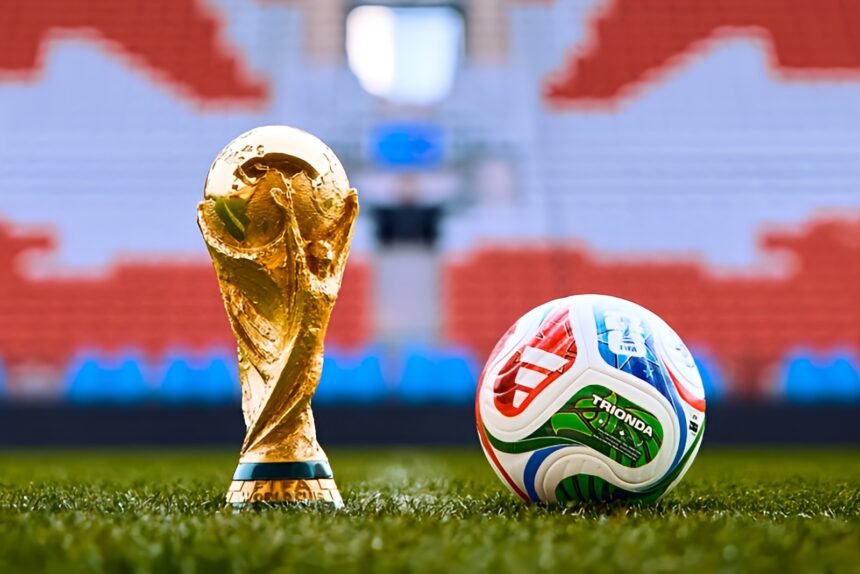

The issue of Iran World Cup participation has become a topic of intense international debate as political tensions between the United States and Iran continue to escalate. With the next FIFA World Cup approaching in less than 100 days, uncertainty surrounds whether the Iranian national football team will take part in the global tournament, which will be co-hosted by the United States.
Recent military developments in the Middle East have raised serious questions about the future of Iran’s involvement in international sporting events, particularly the highly anticipated football championship.
Iran World Cup Participation
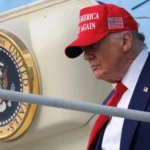
The discussion surrounding Iran World Cup participation intensified after US President Donald Trump stated that he is “not concerned” about whether Iran ultimately competes in the tournament. His remarks came amid a series of escalating military actions in the region. The United States and Israel recently launched air strikes targeting locations inside Iran, prompting retaliatory actions by Iran against US-aligned nations in the Gulf region.
The conflict has heightened geopolitical tensions, casting a shadow over global events, including international sports competitions.
Despite the volatile situation, Iran World Cup participation remains technically confirmed because the Iranian national team has already secured qualification for the upcoming FIFA World Cup. The team is scheduled to play its group matches against New Zealand and Belgium in Los Angeles before facing Egypt in Seattle. If Iran participates, this would mark its fourth consecutive appearance at football’s most prestigious international tournament, reflecting the country’s strong presence in Asian football over the past decade.
However, uncertainty about Iran World Cup participation has grown following comments from Iranian football officials. Reports suggest that Mehdi Taj, the head of the Iranian Football Federation, has expressed concerns about whether the team will actually attend the tournament under the current circumstances.
Speaking to Iranian television, Taj indicated that the ongoing conflict and the recent US attacks have created a situation in which focusing on sporting events like the World Cup has become extremely difficult. He emphasized that the final decision regarding Iran’s participation would ultimately rest with the country’s sports authorities.
The political instability within Iran has further complicated the situation. Following the assassination of Iran’s Supreme Leader Ali Khamenei, the country’s political future has entered a period of uncertainty. Analysts believe that this instability could influence major national decisions, including Iran World Cup participation. Experts in Middle Eastern politics argue that the current conflict represents more than just a short-term crisis.
According to Dr. Sanam Vakil, director of the Middle East and North Africa program at Chatham House, the confrontation appears to be entering a prolonged phase that could significantly reshape the region’s political landscape.
Dr. Vakil explained that the ongoing conflict is not likely to resemble a brief or limited military exchange. Instead, it could evolve into a long-term geopolitical struggle involving multiple regional actors. Such a scenario would inevitably affect international events, including sports tournaments that require extensive international cooperation and travel arrangements. As a result, the debate over Iran World Cup participation is now closely tied to broader political and security concerns across the Middle East.
Meanwhile, the global football governing body FIFA has acknowledged the situation and confirmed that it is closely monitoring developments. Officials within FIFA have emphasized that their primary objective is to ensure a safe and inclusive tournament environment for all participating teams. FIFA Secretary General Mattias Grafström stated that preparations for the World Cup are continuing as planned, with the organization focused on ensuring that every qualified team has the opportunity to compete.
According to FIFA regulations, if a national team withdraws from the tournament or is removed due to extraordinary circumstances, the governing body has the authority to take necessary measures. These measures could include inviting another national association to replace the withdrawing team. Because of this rule, speculation has emerged regarding which country might replace Iran if Iran World Cup participation becomes impossible.
Among the potential alternatives being discussed are teams from the Asian Football Confederation. Football analysts suggest that Iraq could be a leading candidate for replacement, especially if it secures qualification through an upcoming continental play-off. Another possible option is the United Arab Emirates, which narrowly missed direct qualification but remains competitive within Asian football.
FIFA has not officially confirmed any contingency plans, but discussions about replacement teams highlight how seriously the international community is taking the possibility that Iran may not compete.
Beyond football, the uncertainty surrounding Iran World Cup participation reflects the broader intersection between global politics and international sports. Major sporting events such as the FIFA World Cup often become symbolic platforms for diplomacy, national identity, and international relations. When geopolitical conflicts escalate, these events can quickly become entangled in political controversies.
For fans around the world, the situation remains uncertain but closely watched. Football supporters are eager to see whether Iran will ultimately appear on the world stage or whether political developments will prevent the team from competing. As the countdown to the World Cup continues, the question of Iran World Cup participation will likely remain a major talking point in both sports and political circles.
Ultimately, the final decision will depend on multiple factors, including regional security conditions, diplomatic relations, and decisions by Iranian authorities as well as FIFA officials. Until those issues are resolved, the future of Iran World Cup participation remains uncertain, highlighting how global events beyond the football field can influence the world’s most popular sport.