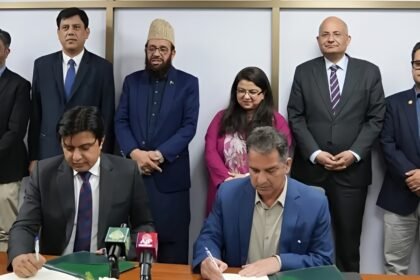

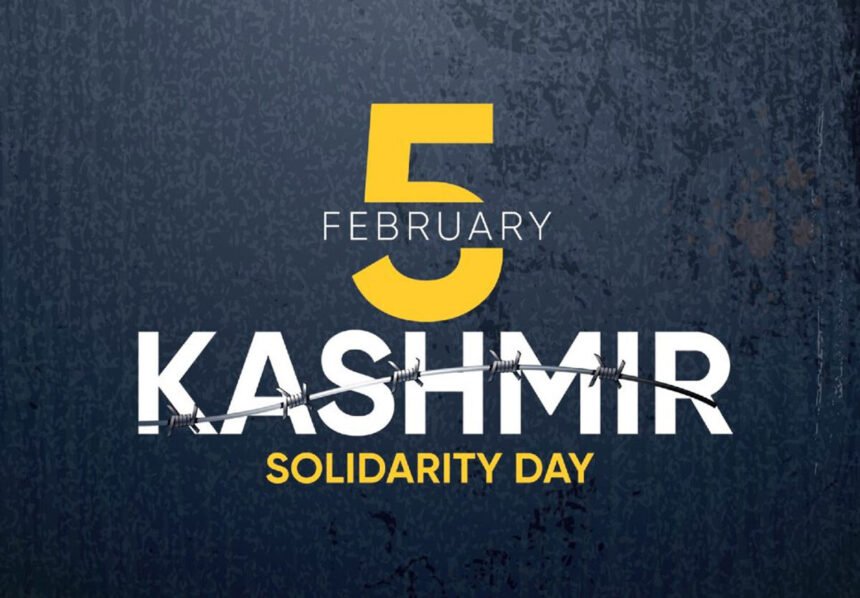

Every year on 5 February Kashmir Solidarity Day brings the entire Pakistani nation together to express unwavering support for the people of Indian Illegally Occupied Jammu and Kashmir (IIOJK). This national holiday, observed as solidarity day of Kashmir, serves as a powerful reminder of Pakistan’s moral, diplomatic, and political commitment to the Kashmiri freedom struggle. In 2026, as Pakistan marks another Kashmir Solidarity Day, thousands gathered across the nation to reaffirm their pledge for Kashmiri self-determination under United Nations Security Council resolutions.
What is Kashmir Solidarity Day?
Kashmir Solidarity Day is observed annually on February 5 as a national holiday throughout Pakistan. The day expresses Pakistan’s complete support for the people of IIOJK and their inalienable right to self-determination. Since its inception in the early 1990s, the solidarity day of Kashmir has drawn international attention to human rights violations and the ongoing freedom struggle in the disputed region.
The observance commemorates the sacrifices of Kashmiri martyrs who have endured imprisonment, destruction of homes, and loss of family members while remaining steadfast in their struggle against Indian occupation. On this day, Pakistan reiterates that Kashmiris are not alone in their fight for justice and freedom.
Historical Background of Kashmir Solidarity Day
Origins in 1990
The concept of Kashmir Solidarity Day was first proposed by Qazi Hussain Ahmad of Jamaat-e-Islami Pakistan in 1990, during a period when the Kashmir freedom movement reached unprecedented heights. In early 1990, massive processions in Srinagar saw Kashmiris demanding the right to live with dignity and self-determination.
In 1991, then-Prime Minister Nawaz Sharif supported the initiative, calling for a ‘Kashmir Solidarity Day Strike.’ The current official commemoration of 5 February Kashmir Solidarity Day was formalized by the Pakistani Minister for Kashmir Affairs and Northern Areas in 2004, establishing it as an annual national observance.
The Kashmir Dispute: 77 Years of Struggle
The Kashmir dispute remains the oldest unresolved international conflict at the United Nations, stemming from India’s forcible occupation of Jammu and Kashmir in 1947. The UN Security Council passed multiple resolutions—including Resolution 47 (1948), Resolution 51 (1948), Resolution 80 (1950), and Resolution 91 (1951)—all calling for a free and impartial plebiscite to allow Kashmiris to determine their future.
The UN Security Council Resolution of April 21, 1948 explicitly stated that both India and Pakistan desire the accession question to be decided through democratic means. However, India has continuously refused to hold such a plebiscite despite these international commitments, denying Kashmiris their fundamental right to self-determination for nearly eight decades.
Kashmir Solidarity Day 2026: Nationwide Observance
Official Events and Activities
On February 5, 2026, Pakistan observed Kashmir Solidarity Day with coordinated activities across the country, Azad Jammu and Kashmir (AJK), and Gilgit-Baltistan. The day was declared a public holiday, with all public and private offices remaining closed to allow maximum participation in solidarity events.
Key events included:
- One-minute silence observed nationwide at 10:00 AM to pay tribute to Kashmiri martyrs
- Main solidarity walk in Islamabad starting from China Chowk, Blue Area, culminating at D-Chowk near Parliament House
- Human chains formed at Kohala Bridge connecting Islamabad to AJK, symbolizing unity between Pakistanis and Kashmiris
- Rallies, seminars, and demonstrations held in Lahore, Karachi, Peshawar, Quetta, Muzaffarabad, and cities from Karachi to Chitral
- Special prayers in mosques across the nation for Kashmir’s liberation
- International outreach through Pakistani missions organizing seminars, walks, and photo exhibitions abroad
Leadership Messages and Commitments
Prime Minister Shehbaz Sharif visited Muzaffarabad and addressed the AJK Legislative Assembly, meeting with Kashmiri leaders to reaffirm Pakistan’s moral and diplomatic support. In his official message on Kashmir Solidarity Day, the Prime Minister stated: ‘Pakistan will continue to extend its complete moral, diplomatic, and political support to the Kashmir freedom struggle, until the Kashmiri people succeed in attaining their right to self-determination through a free and impartial plebiscite.’
President Asif Ali Zardari reaffirmed Pakistan’s ‘steadfast moral, diplomatic and political’ support for Kashmiris’ inalienable right to self-determination as enshrined in UN Security Council resolutions. Pakistan’s military leadership also condemned reported human rights violations in IIOJK and called for a just and peaceful resolution through UN-supervised plebiscite.
Federal Minister for Kashmir Affairs Amir Muqam emphasized that Pakistan stood with Kashmiris who have endured imprisonment and destruction, adding that ‘Kashmiris are not alone’ and that ‘the pain of Kashmiris is Pakistan’s pain.’
Current Situation in Indian Illegally Occupied Jammu and Kashmir
August 5, 2019: Illegal Unilateral Actions
On August 5, 2019, India took illegal and unilateral administrative and legal measures that fundamentally altered Kashmir’s status. The Indian government revoked Article 370 and Article 35A of its constitution, attempting to consolidate its occupation by changing the legal and administrative framework of the disputed territory.
These actions, which contravene the UN Charter and completely defy relevant UN Security Council resolutions and the Fourth Geneva Convention, included bifurcating IIOJK into two Union Territories. India has since engaged in systematic demographic re-engineering to transform Kashmiris into a disempowered minority in their own homeland.
Following these measures, India imposed an indefinite curfew, jailed local political leaders, and cut off all communications including phones, internet, and newspapers. The region became a communication blackhole, isolating Kashmiris from the rest of the world.
Documented Human Rights Violations
The human rights situation in IIOJK remains dire, with international organizations documenting systematic abuses. India has deployed nearly one million troops to control nine million Kashmiris, making it one of the most militarized zones in the world.
Documented violations include:
- Arbitrary detention and imprisonment of political leaders and activists
- Systematic torture and extrajudicial killings by occupation forces
- Enforced disappearances targeting youth and activists
- Use of pellet guns causing blindness among civilians, including children
- Severe restrictions on civil liberties and freedom of expression
- Violations of women’s and children’s rights
- Ecological degradation and exploitation of natural resources
- Profiling of mosques and religious discrimination against Muslims driven by Hindutva ideology
Despite 79 years of repression, Indian forces have failed to crush what experts describe as the legitimate freedom struggle of the Kashmiri people. The resilience of Kashmiris in the face of state terrorism continues to inspire solidarity movements worldwide.
Pakistan’s Unwavering Commitment to Kashmir
Pakistan’s support for Kashmir is grounded in principles of justice, brotherhood, and international law. The commitment extends far beyond symbolic gestures—it represents a fundamental national principle rooted in UN Security Council resolutions that establish Kashmir’s disputed status and prescribe that its final disposition must be made according to the will of Kashmiri people through a fair plebiscite.
Pakistan’s argument is grounded in strong international legalities. Multiple UN resolutions remain valid and applicable until replaced or fully implemented. Pakistan maintains that these resolutions provide the only legitimate path to resolving the Kashmir dispute and ensuring lasting peace and stability in South Asia.
The solidarity day of Kashmir 2026 saw Pakistan emphasize its multi-faceted approach to supporting Kashmiris. This includes diplomatic efforts at international forums, educational initiatives to familiarize younger generations with Kashmir’s history, and practical support for Kashmiri refugees and displaced persons in AJK.
Recent developments in Pakistan’s regional defensive capabilities have strengthened morale among Kashmiris, who believe Pakistan remains steady in both resolve and capacity to support their cause. The nation’s leadership has repeatedly affirmed that Kashmir remains key to achieving lasting peace in South Asia.
International Recognition and Global Solidarity
Kashmir Solidarity Day has gained international recognition beyond Pakistan’s borders. In 2021, the New York State Assembly passed a resolution calling on the Governor of New York to recognize the day as ‘Kashmir American Day,’ meant to acknowledge New York’s Kashmiri community and champion human rights including freedom of religion.
Pakistani diplomatic missions worldwide organize seminars, solidarity walks, and photo exhibitions to highlight the human rights situation in Kashmir. The Ministry of Kashmir Affairs coordinates international outreach, ensuring the Kashmir issue remains visible on the global stage.
Speakers at international forums emphasize that the international community must move beyond statements of concern and take concrete diplomatic and legal steps to resolve the dispute in accordance with UN resolutions and the aspirations of the Kashmiri people. The observance serves as a reminder of the world’s moral responsibility toward Kashmiris.
Educating Future Generations About Kashmir
Recognizing the importance of keeping the Kashmir cause alive among younger Pakistanis, the Ministry of Education coordinates essay-writing and speech competitions in schools across Pakistan on 5 February Kashmir Solidarity Day. These initiatives familiarize students with the historical background of the Kashmir dispute and the ongoing struggle for self-determination.
Educational programs ensure that new generations understand Kashmir’s significance not merely as a territorial dispute but as a humanitarian issue involving the fundamental rights of millions of people. This sustained educational focus helps maintain public awareness and political will to continue supporting the Kashmiri cause.
The Role of Media in Kashmir Solidarity
Pakistani officials have emphasized the media’s crucial role in shaping public opinion on Kashmir. The media’s extensive reach allows it to highlight what authorities describe as the stark contrast between the Kashmiri freedom struggle and India’s use of force, including pellet guns, mass detentions, and communication blackouts.
Media coverage of Kashmir Solidarity Day helps amplify Kashmiri voices that are being systematically suppressed in IIOJK. Documentaries showcasing the sacrifices of Kashmiri people and the atrocities committed by occupation forces play a vital role in maintaining international awareness of the situation.
The Path Forward: Hope for Kashmir’s Freedom
As Pakistan observes Kashmir Solidarity Day year after year, the message remains consistent: the Kashmiri people’s struggle for self-determination is just, legitimate, and will continue until fulfilled. Pakistan’s leadership has repeatedly stated that ‘the days of darkness shall give way to the dawn of freedom, and that day is not far, when the people of Jammu and Kashmir shall break the shackles of Indian occupation.’
The observance of solidarity day of Kashmir serves multiple purposes: honoring martyrs, raising international awareness, reaffirming Pakistan’s commitment, and most importantly, sending a clear message to Kashmiris that they are not alone in their struggle. Every rally, every moment of silence, every speech reinforces this bond of brotherhood.
Pakistan maintains that it will keep raising the Kashmir issue at all international forums until it is resolved in line with United Nations Security Council resolutions and the aspirations of the Kashmiri people. The commitment is not time-bound or conditional—it represents a fundamental principle of Pakistan’s foreign policy and national identity.
Unity, Resilience, and Hope
Kashmir Solidarity Day 2026 once again demonstrated the unbreakable bond between Pakistan and the people of Kashmir. From the streets of Islamabad to the valleys of Muzaffarabad, from Karachi to Chitral, millions of Pakistanis stood united in expressing support for their Kashmiri brothers and sisters.
The observance of 5 February Kashmir Solidarity Day serves as a powerful annual reminder that the Kashmir dispute remains unresolved and that the international community must fulfill its commitments to the Kashmiri people. It reinforces that Pakistan’s support for Kashmir is not merely political rhetoric but a deep-rooted commitment grounded in justice, brotherhood, and international law.
As Pakistan marks another solidarity day of Kashmir, the message to Kashmiris is clear and unwavering: You are not alone. Your sacrifices are not forgotten. Your struggle for self-determination is just and will be supported until victory. The journey may be long, but the destination—freedom and self-determination for Kashmir—remains the shared goal.
Pakistan stands firm in its commitment, confident that international law, justice, and the resilience of the Kashmiri people will ultimately prevail. The Kashmir cause is not just a political issue—it is a matter of human rights, dignity, and the fundamental right of people to determine their own future.
Key Takeaways
- Kashmir Solidarity Day is observed annually on February 5 as a national holiday in Pakistan
- The solidarity day of Kashmir expresses Pakistan’s complete support for Kashmiri self-determination under UN resolutions
- 5 February Kashmir Solidarity Day 2026 saw nationwide rallies, human chains, and a minute of silence at 10:00 AM
- The Kashmir dispute is the oldest unresolved conflict at the United Nations, dating back to 1947
- India’s August 5, 2019 actions revoked Kashmir’s special status and attempted demographic changes
- Nearly one million Indian troops are deployed in IIOJK, making it one of the world’s most militarized zones
- Pakistan’s commitment to Kashmir is grounded in UN Security Council resolutions and principles of justice