

The international political world was shaken when Venezuelan President Nicolás Maduro was captured and brought to the United States following a dramatic military operation. This rare and unprecedented event has not only transformed Venezuela’s political landscape but also significantly strained diplomatic relations between the United States and Venezuela — two nations whose ties were already complex.
What Happened With Venezuela’s Leader
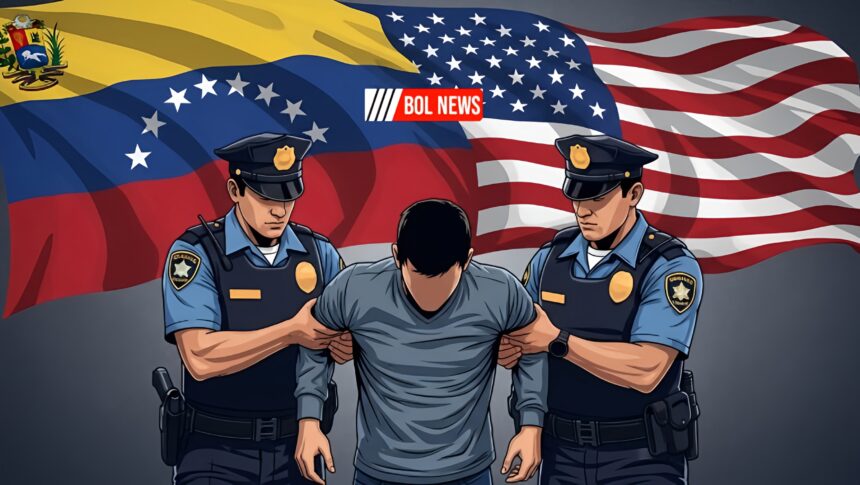
On January 3, 2026, US forces carried out a military operation in Caracas that resulted in the capture of President Nicolás Maduro and his wife, Cilia Flores. Both were then transported to the United States, where they appeared before a federal court to face serious charges.
Surprise US Operation
The operation was unprecedented. It involved US military action in Venezuela aimed at detaining a sitting head of state — an act that immediately drew global attention and controversy. US authorities claim the mission was carried out to enforce drug trafficking and narco-terrorism charges against Maduro.
Court Proceedings
In court, Maduro pleaded not guilty to all charges. He maintained his innocence and even declared that he remains the legitimate president of Venezuela, despite being in US custody.
Why the Arrest Is Shaking International Relations
The capture of a national leader by another country is extremely rare and carries enormous diplomatic consequences. In this case, it has triggered tension not just between the US and Venezuela, but among global powers watching closely.
Accusations of Illegitimate Action
Venezuelan officials and allies have strongly condemned the US action, calling it a violation of sovereignty. Maduro himself labeled the arrest a “kidnapping” and has challenged the legality of the operation.
Global Reactions
- United Nations: Several countries called for emergency discussions at the U.N. Security Council about the legality and implications of the US action.
- Russia: Moscow criticized the US intervention and expressed support for Venezuela’s interim government, framing it as a defense against foreign interference.
- China: Beijing condemned the US operation and emphasized the need to respect international law and sovereignty, calling for solidarity with Venezuela.
These reactions show that the situation has broader geopolitical implications beyond US–Venezuela ties.
Government Change and Internal Political Chaos
After Maduro’s capture, Venezuela’s vice president, Delcy Rodríguez, was sworn in as interim president. This move aimed to stabilize governance in Caracas, but the situation remains tense and uncertain.
Internal Power Struggles
The leadership change has exposed divisions within Venezuela’s political and military apparatus. Amid heightened fear and uncertainty, armed militias and security forces have been deployed in parts of the country, adding to the instability.
Public Reaction in Venezuela
Many Venezuelans oppose the US action and see it as foreign aggression, while others view it as an opportunity for future political reform. This split in public opinion reflects the complex and polarized nature of Venezuelan society today.
Impact on US-Venezuela Diplomatic Relations
This arrest has seriously strained relations between Washington and Caracas.
Breakdown in Diplomatic Trust
Many governments see the US decision to use military force inside Venezuela as a breach of international norms. Even US allies have expressed concern about the legal and ethical implications of the operation.
Legal and Political Debates
The US claims its actions were justified under long-standing drug trafficking indictments, including allegations that Maduro was involved in international cocaine distribution and narco-terrorism. These accusations have been part of US legal efforts for years, predating the operation.
Opposition leaders and diplomats argue that such measures set a dangerous precedent: if a world power can seize a sitting leader, the fundamental principles of state sovereignty and diplomatic immunity may be weakened.
Regional and Global Implications
The event has repercussions not only for the US and Venezuela but for broader international relations.
Latin American Politics
Neighbors of Venezuela, including Colombia and other South American nations, have criticized the US action as a potential violation of regional sovereignty. These events could shift diplomatic alliances and influence political dynamics across the continent.
Geopolitical Power Play
Major powers like Russia and China have used the situation to position themselves as defenders of national sovereignty against US intervention. This could strengthen their diplomatic ties with nations wary of US influence in global politics.
What Happens Next?
As the Maduro case progresses in US courts, the diplomatic fallout will likely continue.
Legal Proceedings Ongoing
Maduro and his wife will face federal charges in New York, where their legal defense will challenge the legality of the arrest and argue sovereign immunity.
Politics and Stability in Venezuela
Venezuela’s interim government is working to maintain control, but internal challenges remain. Whether Maduro’s political allies regain influence or a new leadership emerges remains uncertain.
International Response
The United Nations and other global bodies may mediate diplomatic tensions or set new norms on foreign intervention and international law.